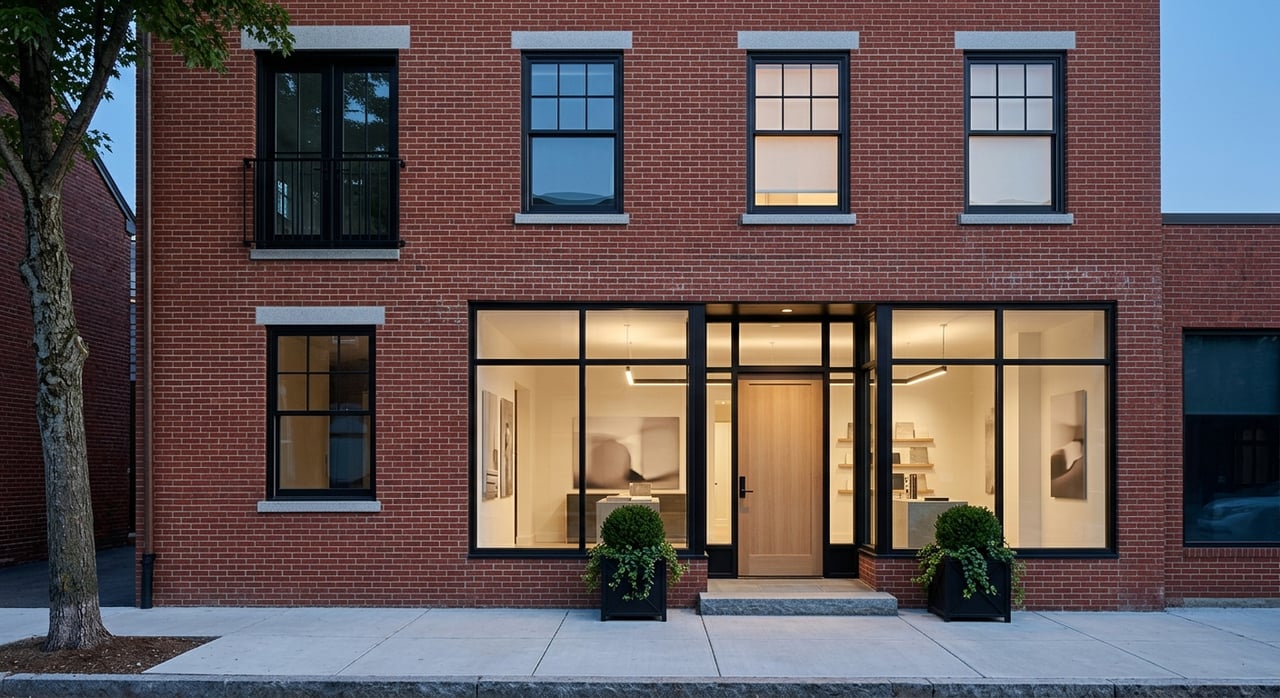
If you are looking for a Northern New Jersey investment that can spread risk across more than one income stream, mixed-use property in Morristown deserves a close look. You get the appeal of a walkable downtown, direct rail access, and a market where residential and commercial demand can support the same address. In this guide, you’ll see why Morristown stands out, what zoning and rent details matter most, and how to underwrite a deal more carefully before you move forward. Let’s dive in.
Why Morristown Fits Mixed-Use
Morristown offers many of the features mixed-use investors usually want in one place. The town’s zoning describes the Town Center as Morristown’s highest-intensity district and emphasizes walkability, while the Morristown Partnership highlights downtown as a mix of housing, dining, fitness, entertainment, and retail connected to the Midtown Direct rail line and major highways. That combination can help support both apartment demand and ground-floor commercial activity.
The broader county trend also matters. According to Morris County’s 2025 development report, the county continues to shift former office campuses and commercial properties toward mixed-use redevelopment. For you as an investor, that gives Morristown a strong regional backdrop rather than making it a one-off story.
Transit Access Supports Demand
Transit is a real value driver in this market. NJ Transit’s Morristown Station information shows service on the Morris & Essex Line, with station parking in Lot 1 and Lot 2 plus bike racks and lockers. In a town where many residents and visitors value rail access, that can strengthen the case for mixed-use near downtown and the station area.
Parking also remains part of the equation. The Morristown Partnership says downtown includes more than 3,600 public parking spaces, including more than 3,000 covered spaces at Headquarters Plaza and more than 500 spaces at the station. Even in a walkable district, you still need to model parking carefully because it affects retail convenience, tenant appeal, and operating assumptions.
Station-Area Development Offers a Useful Signal
Morristown’s current projects page gives you a real-world example of how the market is evolving. The town notes that the Transit Village Core zoning along Morris Street allows higher densities and mixed uses around the station. It also highlights the Highlands at Morristown Station, which opened with 218 apartments, 8,000 square feet of retail, and a 722-space garage.
That does not guarantee the same outcome for every property. Still, it is a strong local signal that mixed-use near the station can attract both residential and commercial demand. You can review these examples on Morristown’s current projects page.
Key Zoning Districts to Know
Before you analyze any listing, start with zoning. Morristown adopted a new Land Development Ordinance in February 2024, effective March 4, 2024, and the town says it governs use and design issues such as parking, landscaping, fencing, signage, and environmental standards. The update was built around the 2014 Master Plan’s form-based planning approach, which is important because design and walkability are not side issues here.
You can review the ordinance framework through the Town of Morristown zoning update page and the underlying land development code.
TC District
The TC district is the highest-intensity mixed-use district in Morristown. It typically allows two- to four-story buildings with shallow setbacks, which can make it especially relevant if you are targeting traditional downtown mixed-use product.
TOD Overlay
The TOD overlay around the train station is designed to strengthen the pedestrian connection between the station and the Green. It also allows additional height, which can materially affect the economics of a redevelopment or repositioning plan.
MG, HQP, and MX-1
The MG overlay allows four- to five-story buildings with minimal setbacks. HQP is oriented toward greater building height and recommends office and hotel uses above ground-floor retail. MX-1 is intended to repurpose residential estates for a mix of residential and office uses, with a retail overlay serving local customers.
The takeaway is simple: not all mixed-use opportunities in Morristown are the same. The district and any overlay can change what is permitted, what is practical, and what your final numbers look like.
Entitlement Timing Can Affect Returns
In mixed-use investing, timing is part of the underwriting. Morristown’s zoning office says applicants should call ahead, that board applications can take a long time, and that concept plan review is recommended before filing a major or minor site plan. That means a property that looks straightforward online may still involve a longer approval path than you expect.
You can confirm that process on the Town of Morristown zoning page. For you, the practical lesson is to build entitlement time into your deal analysis instead of treating it as an afterthought.
Residential Rents in Morristown
If your mixed-use property includes apartments, use current apartment data instead of broad county averages. As of March 2026, RentCafe’s Morristown rent data shows average apartment rent at $2,811 per month. It also reports one-bedroom units at $2,534, two-bedroom units at $3,246, and three-bedroom units at $3,778.
That gives you a useful starting point for underwriting upper-floor residential units. But you should still adjust for building condition, layout, location, and whether the property sits in a more walkable downtown pocket or a less central location.
Commercial Rents Vary by Product
On the commercial side, asking rents vary more sharply. LoopNet search pages show average asking rents around $34 per square foot for retail and $24 per square foot for office in Morristown, with examples like 125 South Street at $30 per square foot plus utilities, CAM, and taxes, and 60 Washington Street at $24 per square foot per year.
That spread matters because a mixed-use asset is rarely a simple plug-and-play model. Ground-floor retail, office space, or professional suites may each perform differently depending on location, frontage, visibility, and parking.
Blended Rent Rolls Need Extra Attention
One reason mixed-use investing can be attractive is the potential for diversified income. A Morristown listing at 2 Perry Street shows how that can look in practice, with a top-two-floor three-bedroom residence listed at $4,010 per month and main-floor professional space at $2,750 per month.
This kind of structure can create flexibility, but it can also make analysis more complex. Residential leasing patterns, commercial lease terms, and expense responsibilities do not always move together, so you need to underwrite each component on its own and then as part of the full property.
Vacancy Depends on Asset Type
Vacancy should be evaluated by product, not with one broad downtown number. CommercialCafe’s Morristown office market data reported office vacancy at 13.98% with average asking rent of $37.94 per square foot in 2023. The research report also notes that a 2025 MCEDC article said Class A office rents in the submarket had risen 42 percent since 2021 to $48 per square foot and vacancy was below 10 percent, while the Morristown Partnership says downtown retail vacancy is less than 4 percent.
For you, the message is clear. Main-street retail and top-tier office space may behave very differently from older office inventory, so your assumptions should match the actual space type in the building you are considering.
Rent Control Can Change the Math
This is one of the most important underwriting issues for mixed-use buildings with apartments. Morristown says rent control applies to rental units built before 1981, to non-exempt apartment buildings and multifamily homes, and to single-family homes and condos rented while the owner is absent. The ordinance is CPI-based, requires 60 days’ notice before rent increases, and includes a decontrol and re-control provision when a tenant leaves.
You can review those details on the Town of Morristown rent leveling page. If a property includes residential units, you should verify right away whether any units fall under rent control because that can directly affect your revenue growth assumptions.
A Smart Underwriting Checklist
When you review a mixed-use deal on MLS or LoopNet, keep your process disciplined. In Morristown, the right checks are often the difference between a promising asset and a frustrating one.
Here is a practical checklist to use:
- Confirm the exact zoning district and any overlay
- Verify whether each use is permitted or conditional
- Check whether any residential units are subject to rent control
- Compare asking rents with achieved rents, not just marketing numbers
- Review current lease expirations and renewal risk
- Model parking count and parking cost explicitly
- Account for entitlement timing if redevelopment or major changes are planned
- Consider future competition from additional mixed-use redevelopment in the county
This checklist reflects the issues highlighted in Morristown’s zoning framework and application process. It also lines up with the county’s broader trend toward continued mixed-use redevelopment, which can create both opportunity and competition.
What This Means for You
Morristown can make sense for mixed-use investors because it combines walkability, transit access, active redevelopment patterns, and multiple potential revenue streams in one market. At the same time, the details matter here. Zoning, overlays, rent control, parking, and product-specific vacancy can all change the quality of a deal.
If you want to invest in mixed-use property in Morristown, your advantage comes from local analysis, not generic assumptions. Working through the zoning map, rent profile, and entitlement path before you commit can help you make a more confident and better-informed decision.
If you are exploring a mixed-use purchase in Morristown or elsewhere in Northern New Jersey, Michael Gabriel can help you evaluate opportunities with local market insight, responsive guidance, and a practical approach to investment property analysis.
FAQs
What makes Morristown attractive for mixed-use property investment?
- Morristown offers a walkable downtown, rail access through Morristown Station, significant public parking, and zoning districts that support higher-intensity mixed-use development.
Which Morristown zoning districts matter most for mixed-use investing?
- The key districts and overlays mentioned in Morristown’s land development framework are TC, TOD, MG, HQP, and MX-1, each with different rules and development patterns.
How should you estimate apartment rents for mixed-use property in Morristown?
- Use current Morristown apartment data as a baseline, including RentCafe’s reported average rent of $2,811 per month as of March 2026, then adjust for location, condition, and unit mix.
How do commercial rents differ for Morristown mixed-use properties?
- Commercial asking rents vary by use type, with LoopNet research showing retail asking rents around $34 per square foot and office around $24 per square foot, though actual rates depend on the specific property.
Does rent control apply to Morristown mixed-use buildings with apartments?
- It can, especially for certain rental units built before 1981 and other covered housing types, so you should verify rent leveling status early in the underwriting process.
Why is parking still important for mixed-use property in downtown Morristown?
- Even in a walkable, transit-served market, parking can affect commercial convenience, tenant demand, and redevelopment feasibility, so it should be modeled directly in your analysis.