If you have ever driven through Summit and wondered why one block looks storybook Tudor while the next feels grand and symmetrical, you are not alone. Summit’s streets read like an open-air museum, and that makes shopping for a home both exciting and a bit overwhelming. In this guide, you will learn how to spot key architectural styles, where they tend to cluster, and what to expect if you plan to update or preserve a home here. Let’s dive in.
Why Summit looks so distinct
Summit’s past still shapes what you see today. The city’s Historic Preservation Commission helps protect neighborhood character and advises on appropriate exterior changes, which keeps the architectural mix intact across key corridors and districts. You will also find living history at the Carter House, a farmhouse built around 1741 that now serves as a local museum, a reminder that Summit’s roots predate the railroad era. As rail service grew in the late 1800s and early 1900s, Summit evolved into a commuter suburb with a walkable downtown and handsome residential streets that Preservation New Jersey cites for their historic character.
- Learn about the city’s Historic Preservation Commission and review process on the official site: City of Summit Historic Preservation Commission
- See Summit’s oldest surviving home at the Carter House
- Explore the downtown historic context in this overview from Preservation New Jersey
Where styles cluster in Summit
Summit’s neighborhoods give you quick clues about what styles to expect. On the Northside, including Hillcrest, Kent Place Boulevard, and Beekman Terrace, you will see many larger Colonial Revival homes along with recent custom builds that borrow traditional details. Around Summit Hill and Hobart Avenue, older Victorians and turn-of-the-century homes create a detailed streetscape with wrap porches and decorative trim. Along Canoe Brook Parkway, the postwar building boom delivered many split-levels and ranches from the 1950s and 1960s. Downtown retains a historic commercial core with nearby walkable housing pockets. For neighborhood names and local district references, the LivingPlaces Summit city profile is a helpful primer.
Colonial and Colonial Revival
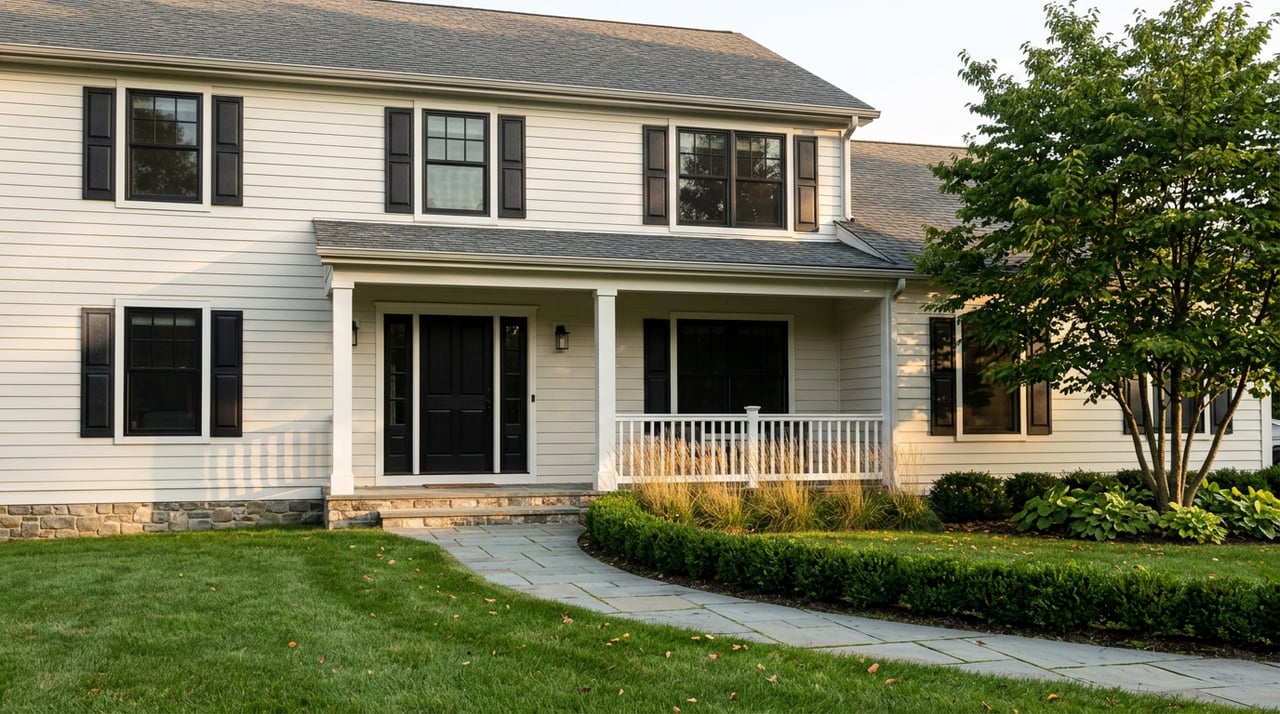
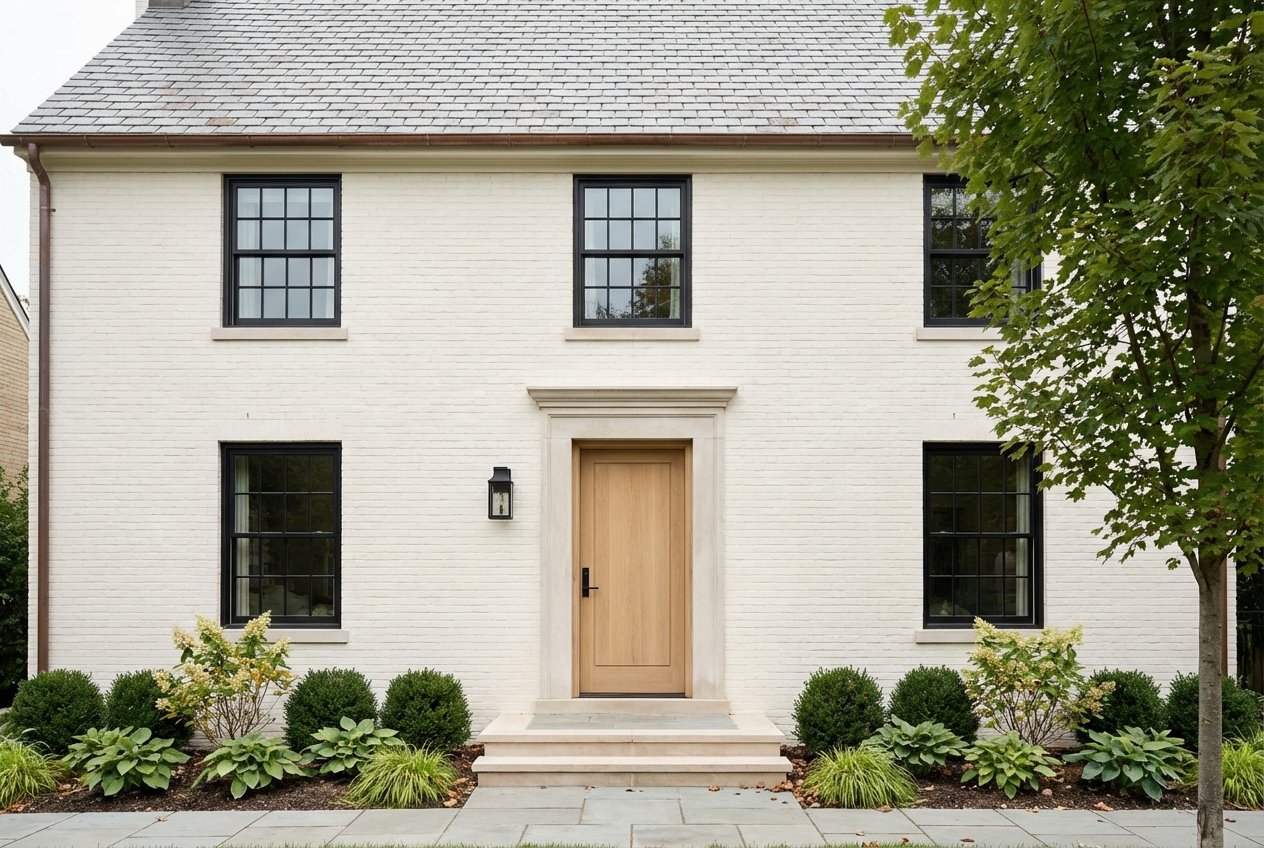
If you spot a symmetrical front, a centered entry with a pediment and sidelights, and multi-pane double-hung windows, you are likely looking at a Colonial Revival. This style has been popular in the United States since the 1880s and remains a favorite today. The National Park Service offers a clear overview of the features you will notice most on tours.
- Typical age in Summit: late 1800s through the early 1900s, plus many modern custom builds that mimic Colonial details
- Common interiors: center-hall floor plans, formal living and dining, and original millwork and hardwoods
- Buyer notes: kitchens and baths are often updated; windows may be original single-pane and paired with storms; mechanical upgrades are common
For a deeper style snapshot, see the NPS review of Colonial Revival architecture.
Victorian homes
Victorian homes in Summit often show asymmetry, bay windows, towers or turrets, spindlework, and generous porches. These houses tend to have high ceilings and more compartmentalized floor plans than newer builds. You will see them in pockets near Summit Hill and along older corridors like Hobart Avenue, where historic character is part of the local identity.
- Typical age in Summit: late 1800s into the very early 1900s
- Buyer notes: intricate rooflines and porches call for attentive maintenance; plaster repair and millwork restoration are common; modernizing plumbing or electrical can take extra planning
Tudor Revival
Look for steeply pitched cross gables, half-timbering over stucco or brick, tall decorative chimneys, and leaded casement windows. Inside, many Tudors feature exposed beams and cozy fireplace nooks. The 1920s and 1930s brought a wave of period-revival construction to Summit, and Tudors remain a signature look on Northside streets and early 20th-century subdivisions.
- Typical age in Summit: mainly 1910s through 1930s
- Buyer notes: second-floor bedrooms can be smaller and tucked under rooflines; original leaded windows are prized and often restored rather than replaced; specialist roof and chimney care is common
For a quick visual checklist, see the Tudor style overview on LivingPlaces.
Mid-century ranch and split-level
Postwar Summit saw a second major building phase. Along corridors like Canoe Brook Parkway, you will find many 1950s and 1960s ranches and split-levels with simpler rooflines, attached garages, and casual interiors. These homes often appeal to buyers who want to rework a kitchen, open a wall, or add efficient systems without navigating ornate historic details.
- Typical age in Summit: 1950s through 1960s
- Buyer notes: insulation, HVAC, and window upgrades can yield comfort gains; many kitchens and baths are due for contemporary finishes; the structure is often straightforward for layout updates
New custom and transitional builds
In recent decades, larger Northside lots have seen tear-downs and custom construction that blend with historic streetscapes. You will often see new builds that read as Colonial or a simplified “transitional” take, yet deliver modern systems, open plans, en suite baths, and high-efficiency HVAC. When comparing listings, it helps to note whether a “Colonial” is a historic home or a recent interpretation.
Neighborhood compatibility and permitting also come into play for exterior changes. Summit’s development regulations and design guidelines outline how additions and replacements should relate to the neighborhood, which is especially relevant on prominent streets.
- Check the municipal design guidance at Summit’s Development Regulations
Renovation and permitting in Summit
If you are planning exterior work that is visible from the street, verify whether the property sits in a locally designated or listed district before you promise a timeline. The city’s Historic Preservation Commission provides guidance and may review projects to help maintain neighborhood character. Always confirm district boundaries with City Hall or the State Historic Preservation Office, and plan for additional review when appropriate.
- Start with the City of Summit Historic Preservation Commission
- For historic context around the downtown district, see Preservation New Jersey’s overview
Showing-day style ID checklist
Keep this handy when you tour homes in Summit:
- Symmetrical facade, central door, multi-pane windows: likely Colonial or Colonial Revival
- Asymmetry, bay windows, ornate brackets, wrap porch: likely Victorian
- Steep gables, half-timbering, tall chimney, leaded casements: likely Tudor Revival
- Low profile, wide eaves, attached garage, big front window: likely mid-century ranch or split-level
Quick inspection checklist for older homes
A careful look during showings can save time later. Ask your inspector to pay special attention to the items below and plan follow-up quotes if needed.
- Roof and drainage: note roof age and complexity, check flashing and gutters, and look for signs of moisture at the foundation or in the basement
- Electrical: identify panel size and wiring type; older systems like knob-and-tube can affect insurance and scope. See background on legacy wiring in this InterNACHI discussion.
- Plumbing and sewer: older homes can have cast iron or galvanized piping. A sewer camera inspection is a smart buy, and this overview explains why aged lines matter for budgets: old-house plumbing primer.
- Lead-based paint: any pre-1978 home requires federal lead disclosure and safe work practices during renovation. Review the EPA’s summary of the Lead-Based Paint Disclosure Rule.
- Windows and insulation: original windows can often be repaired and paired with storm panels, and air sealing plus attic insulation can improve comfort without full replacements.
Buyer and seller strategy by style
- If you are buying: match your lifestyle to the plan. Mid-century layouts may be simpler to open up, while high-style Victorians and Tudors reward careful preservation with one-of-a-kind character. In or near a historic district, factor review time into your renovation schedule and budget.
- If you are selling: highlight authentic details that buyers love, such as millwork, fireplaces, and original floors. Clarify permitted exterior updates with documentation. Recent mechanical upgrades and thoughtful kitchen or bath refreshes often drive interest across all styles.
Move confidently in Summit’s market
Once you know the cues, Summit’s architecture is easier to read, from classic Northside Colonials to cozy Tudors and practical mid-century homes. Your next step is to align style, budget, and timeline with the right property. For local guidance, neighborhood context, and a smart plan to buy or sell, connect with Michael Gabriel. Get your free home valuation and a clear strategy for your move.
FAQs
How old is most of Summit’s housing stock?
- Many notable homes date from the late 1800s through the 1930s, followed by a major post–World War II wave of mid-century houses and continuing new builds in recent decades.
Do historic rules limit what I can change on a Summit home exterior?
- If a property is inside a locally designated or listed district, exterior changes visible from the street often require review. Start with the city’s Historic Preservation Commission and the municipal design guidelines.
Which Summit home styles are easiest to modernize for open living?
- Mid-century ranches and split-levels are typically simpler to reconfigure, while ornate Victorians and Tudors may need specialist trades to preserve character. Every property is unique, so schedule a thorough inspection first.